
Armless, compact and criss-cross chairs: support in a small space

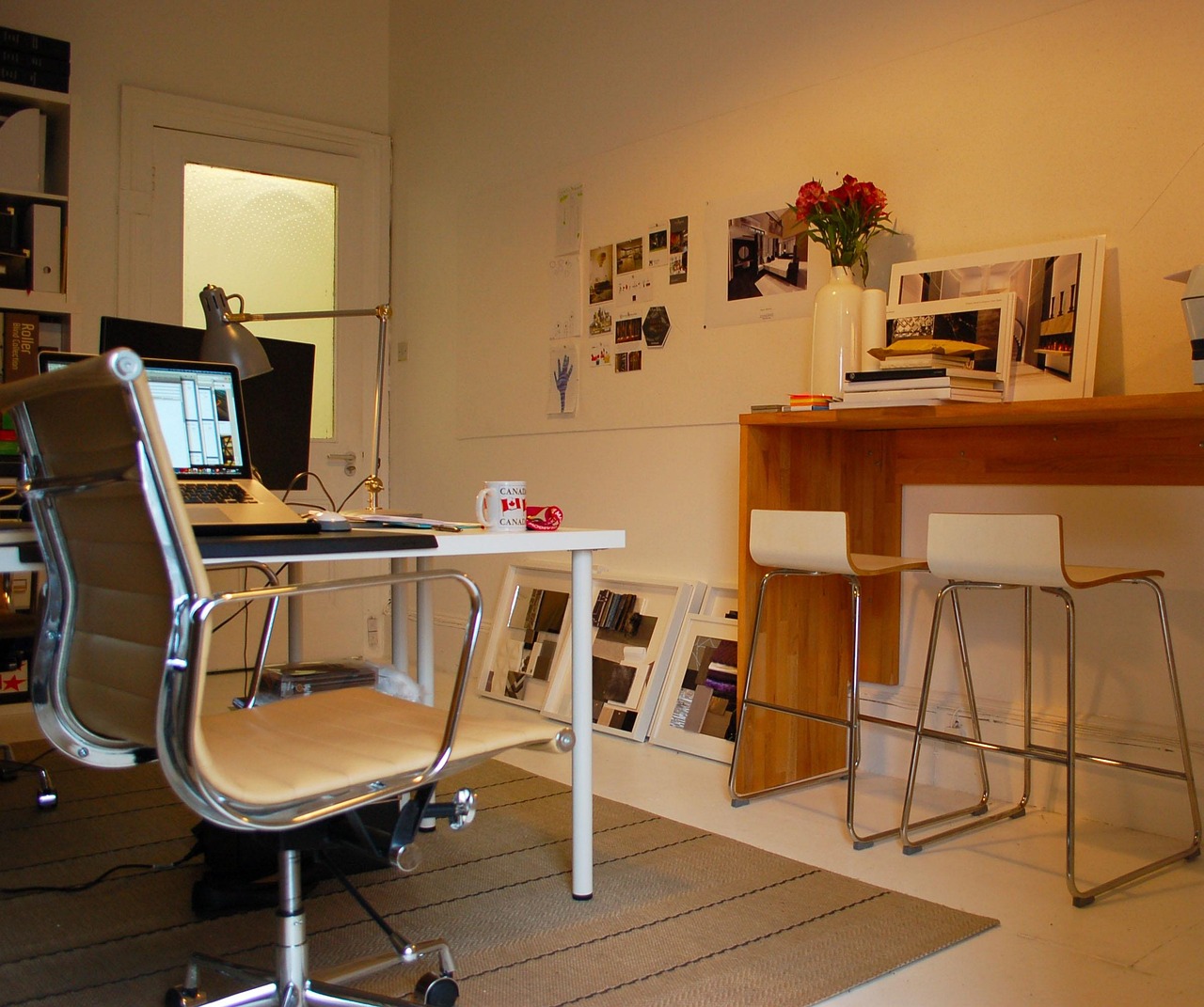
In a spare room, a bedroom corner or a shared living space, the chair is in the room all the time and at the desk for part of it. That changes the priorities: footprint and appearance start to count alongside support.
Armless and compact chairs exist for exactly this, and the trade-offs are more manageable than people expect.
What armless actually costs you
Armrests support the forearms and take load off the shoulders, and for long typing sessions they genuinely help — if they are at the right height. Fixed armrests at the wrong height are worse than none: too high and they lift the shoulders, too low and they encourage leaning to one side.
So the honest comparison is not armless versus armrests. It is armless versus correctly adjusted armrests. Against fixed arms at the wrong height, armless frequently wins.
What you do give up is somewhere to push off from when standing, which matters more for anyone with mobility or joint issues.
What armless gains
- It tucks fully under the desk. This is the whole point, and in a small room it can be the difference between a walkway and an obstacle.
- Freedom of movement. Turning to a side desk or a second surface is unrestricted.
- Smaller visual footprint. In a bedroom or living room the chair reads as furniture rather than office equipment.
- Lighter, which matters if the chair moves between uses.
Criss-cross and cross-legged chairs
A specific armless design with a wide, low seat, intended for people who genuinely sit cross-legged at a desk. If that is how you sit, a conventional chair fights you constantly and one of these is a considerable improvement.
Two things to check. The seat must be wide enough — look for 19 inches or more — and the seat height range must go low enough, because sitting cross-legged raises your effective hip position. Also check the weight rating: a wide seat concentrates load differently from a narrow one.
Compact task chairs
Full ergonomic adjustment on a smaller frame: narrower back, smaller base, shallower seat. These suit shorter users properly, and they suit small rooms.
Watch the base diameter. A compact chair with a full-size 28-inch base has gained nothing where floor space is the constraint. Look for a base around 24 inches.
Flip-up armrests: the middle path
Armrests that rotate upward out of the way. You get support while working and a chair that tucks fully under the desk when you stand up. For a shared or dual-purpose room this is frequently the best answer, and it is worth looking for specifically.
What not to compromise on
Whatever the format, three things still have to be right:
- Seat height range covering your lower leg length.
- Lumbar support reaching the small of your back — this matters more, not less, on an armless chair, because your back is doing more of the work.
- Weight capacity comfortably above your weight.
A compact chair that fails any of these is a small chair rather than a small ergonomic chair.
Floor protection
In a bedroom or a living room the chair is usually on a floor that matters. Castors supplied with office chairs are typically hard nylon for carpet; on timber or laminate they mark and they are loud.
Swap them for soft polyurethane castors — an inexpensive direct replacement on the standard stem — or use a chair mat. In a room that is not an office, this is worth doing on day one rather than after the marks appear.
A realistic recommendation
For a desk in a bedroom used a few hours a day: a compact task chair with flip-up arms, soft castors, and a base under 25 inches.
For a full working day in a small room: prioritise adjustment over footprint. Get the height range and the lumbar right first, then find the smallest chair that satisfies both.
For cross-legged sitting: a wide criss-cross seat with a low height range, and accept that it is a specialist choice.
Checking before you buy
Measure the clear space under your desk, front to back and side to side, and compare it against the base diameter and back height in the listing. Every chair we carry publishes both, along with the seat dimensions and the weight rating.
Common questions
Do I lose back support with an armless chair?
No. Armrests support the forearms, not the back. What matters for support is the seat height range and whether the lumbar reaches the small of your back — and those are unaffected by whether the chair has arms.
What is the best compromise for a shared room?
Flip-up armrests. You get forearm support while working and a chair that tucks fully under the desk when you stand up, which is what makes a small room usable.
Will an office chair damage my bedroom floor?
The supplied hard nylon castors probably will on timber or laminate. Swap them for soft polyurethane castors on day one, or use a chair mat.
Browse the range: all products · about Windy City Furniture · ask us a question.